
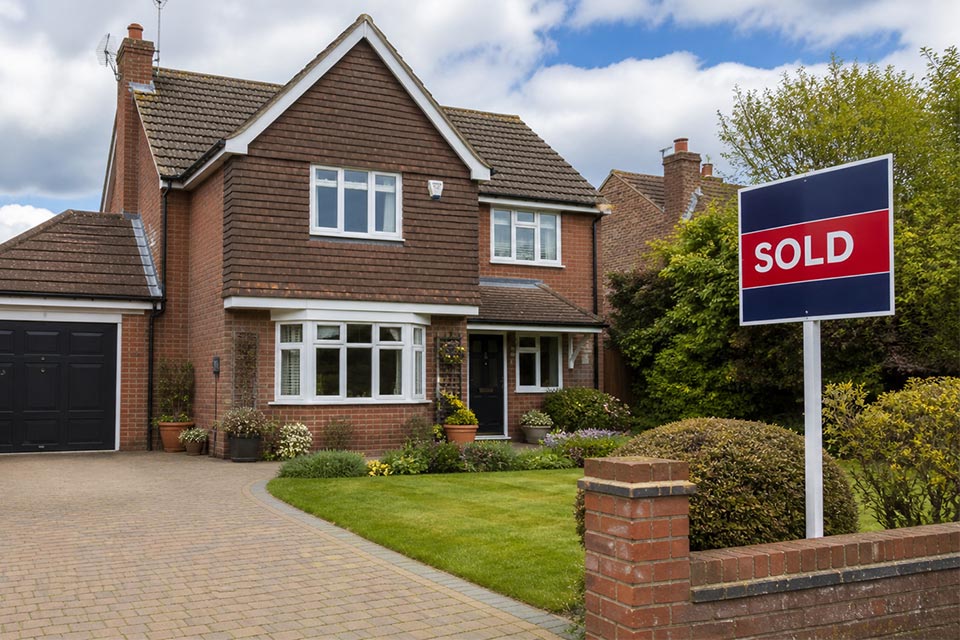
For many families, the family home is more than a property. It may be the place where children grew up, where memories were made and where a large part of a person’s wealth is tied up. As homeowners get older, downsizing can feel like a sensible and practical step. It may free up money, reduce running costs, make day-to-day life easier and avoid the stress of maintaining a larger home.
However, downsizing can also raise important questions about Inheritance Tax, often called IHT. Older homeowners may worry that selling the family home could reduce the tax allowances available to their estate. Adult children may also be concerned about whether the residence nil-rate band still applies if their parent moves into a smaller property, sells the home to move into care or gives away a former home during their lifetime.
The good news is that downsizing does not automatically mean losing the inheritance tax benefit linked to the family home. In some circumstances, the estate may still be able to claim a “downsizing addition” so that the residence nil-rate band can still help, even where the original property is no longer owned at death.[1]
At ASL Solicitors, we help families in Rochdale, Manchester and the surrounding areas with wills, probate and estate planning. This article explains the key rules, including the IHT thresholds that apply as of May 2026, how the residence nil-rate band works, what happens after downsizing and what records families should keep.
What is Inheritance Tax?
Inheritance Tax is a tax that can be charged on a person’s estate when they die. An estate usually includes property, savings, investments, personal possessions and other assets, after deducting debts and liabilities.
The standard rate of Inheritance Tax is 40%. It is normally charged only on the part of the estate that exceeds the available tax-free thresholds, after taking account of exemptions and reliefs.[2]
For many families, the main question is whether the value of the home pushes the estate above the IHT threshold. This is especially common where parents bought a property many years ago and its value has risen significantly, particularly in areas where house prices have increased faster than tax allowances.
Inheritance Tax thresholds as of 2026
As of 2026, the main Inheritance Tax thresholds relevant to family homes are:
- Nil-rate band: £325,000 per person. This is the general IHT threshold and can be used against any assets in the estate.
- Residence nil-rate band: up to £175,000 per person. This can apply where a qualifying home, or in some downsizing cases other assets representing the former home, passes to direct descendants.
- Combined allowance for one person: up to £500,000, made up of the £325,000 nil-rate band and the £175,000 residence nil-rate band, if all conditions are met.
- Combined allowance for a married couple or civil partners: up to £1 million, where both nil-rate bands and both residence nil-rate bands are available and transferable.
- Residence nil-rate band taper threshold: £2 million. The residence nil-rate band is reduced by £1 for every £2 by which the net estate exceeds £2 million.
The nil-rate band is currently maintained at £325,000 and the residence nil-rate band at £175,000. The Office for Budget Responsibility also states that the £325,000 threshold is frozen up to and including 2030 to 2031.[3]
Why downsizing matters for Inheritance Tax
The residence nil-rate band was introduced to help families pass on a home to children, grandchildren and other direct descendants. The issue with downsizing is that the estate may no longer include the original family home when the person dies.
For example, a homeowner may:
- Sell a larger family home and buy a smaller property.
- Sell the home and move into rented accommodation.
- Sell the home to fund care fees.
- Move in with an adult child.
- Give away a home during their lifetime.
- Downsize more than once.
Without special rules, families could lose some or all of the residence nil-rate band simply because the homeowner made a sensible move later in life. HMRC’s downsizing rules are designed to prevent that unfair result in qualifying cases.[4]
What is the residence nil-rate band?
The residence nil-rate band, often shortened to RNRB, is an additional Inheritance Tax allowance that can apply when a person leaves a qualifying residential interest to direct descendants. Direct descendants include children, grandchildren and other lineal descendants. They can also include stepchildren, adopted children, foster children and certain spouses or civil partners of lineal descendants.[5]
The home does not always need to be specifically named in the will. It may pass as part of the residue of the estate, provided the legal conditions are met. HMRC guidance also confirms that the estate may still qualify if personal representatives sell the home during the administration of the estate and pass the proceeds to direct descendants.[5]
This is important because families sometimes assume the children must physically keep the property. That is not usually the case. The key question is whether the home, or the relevant value in a qualifying downsizing case, is inherited by direct descendants in the way required by the rules.
What is the downsizing addition?
The downsizing addition is a rule that may restore residence nil-rate band that might otherwise have been lost because the person sold, gave away or downsized from their home before death.
HMRC guidance says the downsizing addition can apply where all of the following conditions are met:
- The person sold, gave away or downsized to a less valuable home on or after 8 July 2015.
- The former home would have qualified for the residence nil-rate band if it had been kept until death.
- Direct descendants inherit at least some of the estate.
The amount available will depend on the value of the former home, the value of any home still owned at death, the available residence nil-rate band and the value of other assets left to direct descendants. The downsizing addition cannot exceed the residence nil-rate band that would have been available if the sale or downsizing had not taken place.[4]
Example 1: downsizing from a family home to a smaller property
Imagine Mrs Taylor sells her family home and moves into a smaller bungalow. Her original home would have qualified for the residence nil-rate band if she had kept it and left it to her children. When she dies, the bungalow is worth less than the available residence nil-rate band, but her children also inherit savings and investments.
In this situation, her estate may be able to claim the residence nil-rate band on the bungalow and a downsizing addition in relation to the value lost when she moved from the larger family home. The claim depends on the detailed calculation and on whether enough assets are inherited by direct descendants.
This is one reason why downsizing should be considered alongside the will, the estate value and who will inherit what. The move itself may be sensible, but the paperwork and planning need to support the family’s tax position later.
Example 2: selling the home to move into care
Another common situation is where a parent sells their home to fund care costs. By the time they die, they may no longer own a property. The estate may instead consist of bank accounts, investments or remaining sale proceeds.
This does not automatically mean the residence nil-rate band is lost. If the former home would have qualified, the disposal happened on or after 8 July 2015 and direct descendants inherit at least some of the estate, a downsizing addition may still be available.[4]
Families should keep records showing when the home was sold, what it was worth, why it was sold and how the estate is intended to pass. Executors may need this information when preparing the Inheritance Tax forms after death.
How many estates are affected by Inheritance Tax?
Although Inheritance Tax receives a lot of attention, it is still paid by a minority of estates. HMRC’s latest published IHT liabilities statistics state that in the 2022 to 2023 tax year, 31,500 UK deaths resulted in an IHT charge. This represented 4.82% of UK deaths, meaning fewer than 1 in 20 estates paid IHT.[8]
However, the number of affected estates is rising. HMRC reported that the 31,500 taxpaying estates in 2022 to 2023 were 3,700 more than in 2021 to 2022, a 13% increase. IHT liabilities for 2022 to 2023 were £6.70 billion, up £0.71 billion, or 12%, on the previous year.[8]
Property remains a major reason why families need to think about IHT. HMRC says that where net estate value is less than £1 million, estates are likely to consist mainly of residential property and cash. It also reported that 30,600 estates used the residence nil-rate band in 2022 to 2023, sheltering £7.72 billion of chargeable estate value from IHT.[8]
Common planning mistakes when downsizing
Downsizing can be positive, but mistakes are easy to make. Common issues include:
- Not updating the will: A will may refer to a property that has been sold or may no longer reflect the family’s wishes.
- Assuming the residence nil-rate band always applies: The RNRB has conditions, particularly around direct descendants and the estate value.
- Not keeping evidence of the former home: Executors may struggle to claim the downsizing addition without sale records and valuations.
- Leaving the estate in a way that prevents RNRB: Certain trusts or conditional gifts can create complications.
- Forgetting the £2 million taper: Larger estates may lose part or all of the RNRB.
- Making gifts without advice: Lifetime gifts can have tax, care fee and practical consequences.
Should you gift the family home instead of downsizing?
Some families consider gifting the home to children during the homeowner’s lifetime. This should be approached very carefully. If the homeowner continues living in the property rent-free after gifting it, the gift may be treated as a gift with reservation of benefit for IHT purposes. There may also be Capital Gains Tax, care fee assessment and family relationship issues to consider.
Downsizing and gifting are different forms of planning. One is usually about changing where someone lives and freeing up value. The other transfers ownership. Before giving away a home, it is sensible to take legal and financial advice so the family understands both the tax consequences and the practical risks.
How ASL Solicitors can help
At ASL Solicitors, we help clients with wills, probate and estate planning in Rochdale, Manchester and the surrounding areas. We understand that conversations about inheritance, tax and the family home can feel sensitive. Our aim is to make the legal position clear, explain the options and help families make informed decisions.
We can help you:
- Review your will before or after downsizing.
- Consider whether the residence nil-rate band may be available.
- Identify whether the downsizing addition could apply.
- Plan how assets should pass to children or other direct descendants.
- Support executors and personal representatives during probate.
- Review estate records and property sale documents.
- Work alongside financial advisers or accountants where tax planning is needed.
If you are thinking about downsizing, have already sold the family home or are helping a parent plan their estate, we can help you understand the legal position. You can get in touch with ASL Solicitors here.
FAQ: Downsizing and Inheritance Tax
Does downsizing mean my children will lose the residence nil-rate band?
No, not necessarily. If you sold, gifted or downsized from a qualifying home on or after 8 July 2015, your estate may still be able to claim a downsizing addition, provided the former home would have qualified and direct descendants inherit at least some of the estate.
What is the residence nil-rate band in May 2026?
As of May 2026, the residence nil-rate band is up to £175,000 per person. It can apply where a qualifying residence, or in some downsizing cases value connected with a former residence, passes to direct descendants.
What is the standard Inheritance Tax threshold in May 2026?
The standard nil-rate band is £325,000 per person. For a qualifying homeowner leaving a home to direct descendants, the residence nil-rate band may add up to £175,000, giving a possible £500,000 allowance for one person.
Can a married couple pass on up to £1 million free of Inheritance Tax?
In some cases, yes. Married couples and civil partners may be able to combine two nil-rate bands and two residence nil-rate bands, giving up to £1 million before IHT is due. This depends on the estate value, who inherits, whether the RNRB conditions are met and whether the taper rule applies.
What happens if the family home is sold before death?
If the home was sold, gifted or downsized on or after 8 July 2015, the estate may still qualify for a downsizing addition. The executors will usually need records of the sale, the value of the former home and details of how the estate passes to direct descendants.
Do I need to tell HMRC when I downsize?
No. HMRC guidance says you do not need to tell them when the move, sale or gift happens. The personal representatives make the claim when completing the Inheritance Tax return after death, so it is important to keep good records.
Does the residence nil-rate band apply if I leave my home to nieces or nephews?
Usually not. The residence nil-rate band is aimed at homes passing to direct descendants, such as children, grandchildren, stepchildren, adopted children and certain other qualifying descendants. Nieces and nephews are not usually direct descendants for this purpose.
Can ASL Solicitors help with estate planning before downsizing?
Yes. At ASL Solicitors, we can review your will, explain the residence nil-rate band rules and help you consider how downsizing may affect your estate. We support clients in Rochdale, Manchester and surrounding areas with wills, probate and estate planning.
Key takeaway
Downsizing can be a sensible and positive decision, but it should not be viewed in isolation. The family home often sits at the centre of Inheritance Tax planning, and the residence nil-rate band can still be valuable even after a move or sale. The most important steps are to keep clear records, update your will and take advice before making major decisions about property, gifts or inheritance.
For clear, practical support with wills, probate and estate planning, contact ASL Solicitors. We can help you plan with confidence and make sure your family understands the options available.
References
1) HMRC Inheritance Tax Manual – IHTM46050: Downsizing: general principles
https://www.gov.uk/hmrc-internal-manuals/inheritance-tax-manual/ihtm46050
2) GOV.UK – Inheritance Tax
https://www.gov.uk/inheritance-tax
3) GOV.UK – Inheritance Tax nil-rate band and residence nil-rate band thresholds from 6 April 2026 to 5 April 2028
https://www.gov.uk/government/publications/inheritance-tax-nil-rate-band-and-residence-nil-rate-band-thresholds-from-6-april-2026/inheritance-tax-nil-rate-band-and-residence-nil-rate-band-thresholds-from-6-april-2026-to-5-april-2028
4) GOV.UK – How downsizing, selling or gifting a home affects the residence nil-rate band
https://www.gov.uk/guidance/how-downsizing-selling-or-gifting-a-home-affects-the-additional-inheritance-tax-threshold
5) GOV.UK – Work out and apply the residence nil-rate band for Inheritance Tax
https://www.gov.uk/guidance/inheritance-tax-residence-nil-rate-band
6) Legislation.gov.uk – Inheritance Tax Act 1984
https://www.legislation.gov.uk/ukpga/1984/51/contents
7) Legislation.gov.uk – Inheritance Tax Act 1984, Section 8D: Extra nil-rate band on death if interest in home goes to descendants etc.
https://www.legislation.gov.uk/ukpga/1984/51/section/8D
8) HMRC – Inheritance Tax liabilities statistics: commentary
https://www.gov.uk/government/statistics/inheritance-tax-liabilities-statistics/inheritance-tax-liabilities-statistics-commentary
9) Legislation.gov.uk – Finance Act 2016, Schedule 15: Residence nil-rate band and downsizing provisions
https://www.legislation.gov.uk/ukpga/2016/24/schedule/15/enacted/data.xht?wrap=true
10) HMRC – Tax receipts and National Insurance contributions for the UK: monthly bulletin
https://www.gov.uk/government/statistics/hmrc-tax-and-nics-receipts-for-the-uk/hmrc-tax-receipts-and-national-insurance-contributions-for-the-uk-new-monthly-bulletin
11) Office for Budget Responsibility – Inheritance Tax
https://obr.uk/forecasts-in-depth/tax-by-tax-spend-by-spend/inheritance-tax/
12) GOV.UK – Inheritance Tax: unused pension funds and death benefits
https://www.gov.uk/government/publications/inheritance-tax-unused-pension-funds-and-death-benefits
13) House of Commons Library – Inheritance tax: current policy and debates
https://commonslibrary.parliament.uk/research-briefings/sn00093/