
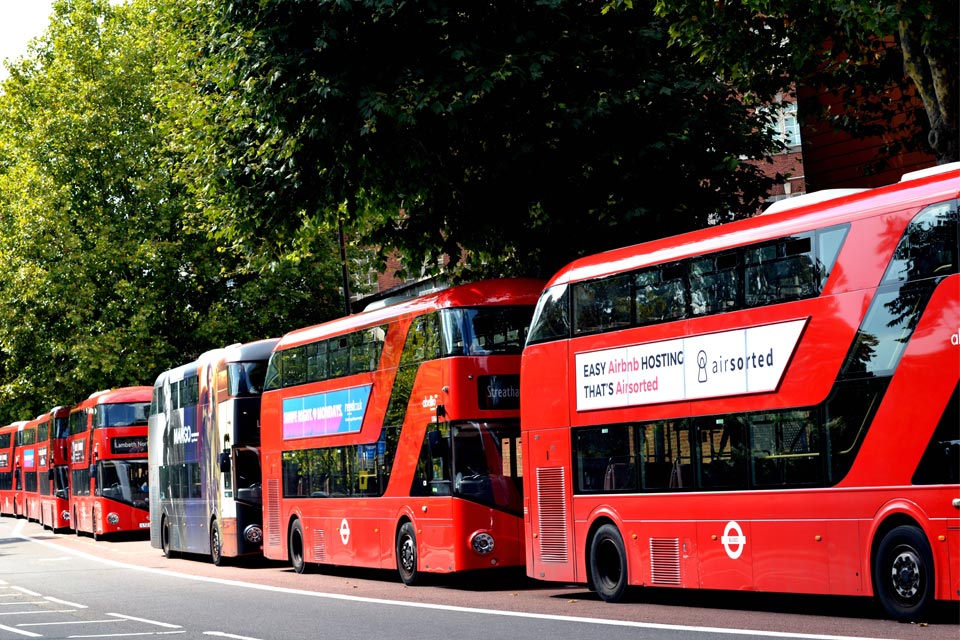
Yes, you may be able to claim compensation if you were injured in an accident on public transport and the accident was caused by another person or organisation failing to take reasonable care. A claim could arise after a collision involving a bus, train, tram or taxi, but a crash is not essential. Passengers can also be injured by sudden braking, unsafe driving, defective doors, damaged seating, spillages, poor maintenance or hazards at a station.
The fact that an accident happened does not automatically prove negligence. You normally need evidence showing that somebody owed you a duty of care, breached that duty, and caused an injury and loss as a result. The party responsible may be the transport operator, a driver, another road user, a station occupier, an infrastructure manager, a local authority or a maintenance contractor.
When can you claim compensation for a public transport accident?
A public transport accident claim may be possible when your injury was caused wholly or partly by negligence. In practical terms, this means the accident was not simply an unavoidable event and that a person or organisation failed to meet the standard of care reasonably expected in the circumstances.
For example, a bus company may be liable where its driver travels too quickly, follows an unsuitable route, pulls away before a vulnerable passenger is safely positioned, brakes sharply without a reasonable need, collides with another vehicle or fails to operate the doors safely. Liability may instead rest with another motorist if that driver caused the bus or taxi to collide or brake suddenly.
On trains and trams, a claim could arise from a collision, derailment, unsafe door operation, a defective handrail, inadequate maintenance, poor crowd management, a dangerous platform gap or another preventable safety failure. At stations, claims commonly involve slips, trips, falls, defective stairs, faulty lifts or escalators, inadequate lighting, ice, spillages and other hazards that were not reasonably managed.
To succeed, the accident must also have caused a recognised injury. This may be a physical injury, such as whiplash, a fracture or a head injury, or a recognised psychological injury. A medical report will usually be required to confirm the diagnosis, the likely recovery period and whether the accident caused or worsened the condition.
What is classed as public transport?
Public transport commonly includes local buses, coaches, trains, the London Underground, trams and other passenger services available to the public. Some community transport and council-arranged passenger services may also fall within the ordinary meaning of public transport.
Taxis and private hire vehicles are sometimes described as public transport, particularly when discussing local transport networks, accessible travel or council-funded journeys. Their legal classification can vary according to the legislation and the purpose for which the term is being used. For a personal injury claim, the label is usually less important than identifying who operated the vehicle, who employed or engaged the driver, which insurer is involved and who caused the accident.
A “council taxi” may be owned or operated by a local authority, but it may also be a privately operated taxi booked or funded by the council. If a private operator supplied the vehicle and driver, the claim will often be directed to the driver, operator or motor insurer rather than the council. A council is not automatically liable merely because it arranged or paid for the journey. It may, however, be a proper defendant if it operated the service, employed the driver or was independently negligent in a way that caused the injury.
Bus accident compensation claims
Claims after a bus or coach collision
Passengers can suffer serious injuries when a bus is struck by another vehicle, leaves the road, overturns, hits street furniture or collides with a bridge or other structure. A claim may be brought against the bus operator where the driver was negligent, against another road user who caused the collision, or against more than one party where responsibility is shared.
The Road Traffic Act 1988 provides the framework for compulsory third-party motor insurance on roads and other public places. This is important because a successful passenger claim is normally met by the relevant motor insurer rather than personally by the individual driver.[8]
Falls and injuries on a bus without a collision
You do not need to have been involved in a crash to make a bus accident claim. A passenger may be injured when a driver pulls away or brakes before it is reasonably safe, drives aggressively, closes the doors on somebody, stops too far from the kerb, fails to lower an accessibility ramp safely or allows a known defect to remain on board.
However, buses inevitably move, turn and stop. An ordinary movement or a necessary emergency stop will not always amount to negligence. The evidence must show that the driving or condition of the vehicle fell below a reasonable standard. CCTV, electronic vehicle data, witness accounts and incident reports can be particularly important when the transport operator disputes what happened.
Train accident compensation claims
Train accidents can range from major collisions and derailments to much more common passenger incidents involving doors, steps, platforms and movement inside a carriage. A claim may be possible if a train operator, infrastructure manager or contractor failed to manage a foreseeable risk and that failure caused injury.
Examples include a door closing on a passenger, a dangerous gap or height difference between a train and platform, a defective step, an unsecured object, a preventable slip inside a carriage, inadequate warning of a hazard, or poor management of overcrowding. In a serious rail incident, technical investigations by the Rail Accident Investigation Branch and regulatory investigations by the Office of Rail and Road may produce important evidence, although a regulatory investigation does not itself decide civil liability.
The Railways and Other Guided Transport Systems (Safety) Regulations 2006, commonly called ROGS, require most railway and tram operators to maintain safety management systems and cooperate with other dutyholders to run the transport system safely.[7] The Health and Safety at Work etc. Act 1974 also places duties on businesses to conduct their operations so that people who are not employees are not exposed to avoidable health and safety risks.[6]
Tram accident compensation claims
Tram claims can involve both road traffic and guided transport issues. A passenger may be injured in a collision with another vehicle, a derailment, sudden movement, a door incident or a fall caused by an unsafe condition. Pedestrians, cyclists and motorists may also have claims where they are injured in a collision with a tram and negligence can be established.
Depending on the accident, responsibility may lie with the tram operator, the infrastructure owner, a road user, a maintenance provider or another contractor. Because trams operate through a mixture of segregated track, stations and public roads, identifying the correct defendant can require evidence from several organisations.
Taxi and council transport accident claims
A passenger injured in a taxi or private hire vehicle can usually pursue a road traffic accident claim if the taxi driver or another road user was negligent. The claim may cover injuries caused by a collision, unsafe driving, sudden braking, defective equipment or an unsafe boarding or alighting arrangement.
Where the journey was arranged for school transport, social care, healthcare or another council service, it is important to establish whether the council operated the vehicle, contracted an external transport provider or simply reimbursed the passenger. The contractual arrangements do not always determine liability, but they can help identify who controlled the driver, vehicle and relevant safety decisions.
Can you claim for an accident at a bus, train or tram station?
Yes. A journey-related injury does not have to occur inside a moving vehicle. The Occupiers’ Liability Act 1957 requires an occupier to take reasonable care to see that lawful visitors are reasonably safe while using the premises.[5] In a station claim, the occupier may be a train operating company, Network Rail, a tram operator, a local authority, a transport authority or another organisation controlling the relevant area.
Examples include slipping on an uncleaned spillage, falling because of a broken step, tripping over damaged flooring, being injured by a faulty barrier, or falling on an escalator that was not properly maintained. The operator is not expected to prevent every possible accident. The key question is whether it had a reasonable inspection, cleaning, maintenance and warning system, and whether it responded appropriately after becoming aware, or when it should reasonably have become aware, of the hazard.
Responsibility can be divided. A station operator may control the concourse, a different company may manage a shop, Network Rail may own or manage infrastructure, and a specialist contractor may maintain an escalator. A solicitor can investigate contracts, inspection records, CCTV and maintenance documents to identify the correct defendant or defendants.
Who can a public transport accident claim be brought against?
The correct defendant depends on what caused the accident. In a road collision, it may be the bus or taxi driver’s employer and insurer, or the insurer of another road user. Where a defect caused the accident, a vehicle owner, operator, manufacturer or maintenance contractor may be responsible. For a station accident, the claim will usually be against the organisation that occupied or controlled the area and failed to manage the hazard reasonably.
A local authority may be liable where it directly operated the transport service, employed the negligent person, controlled the dangerous premises or was responsible for a relevant highway defect. It is not normally liable simply because it licensed a taxi, funded a journey or had a general public transport function.
In complex incidents, several parties may blame one another. A claim can be notified to more than one potential defendant while responsibility is investigated. Liable parties can resolve any contribution dispute between themselves, so an injured passenger should not be expected to identify every contractual arrangement before obtaining legal advice.
What laws apply to public transport accident claims?
Common law negligence
Most public transport injury claims are founded on negligence. You generally need to establish four elements: that the defendant owed you a duty of care, that it breached that duty, that the breach caused the accident or injury, and that you suffered recoverable loss. A transport operator is not an insurer of every passenger’s safety, but it must take reasonable care in the way it drives, operates and maintains its service.
Occupiers’ Liability Act 1957
This Act is especially relevant to accidents in stations, waiting areas, platforms, car parks, stairways, lifts and other premises. The duty is to take reasonable care in all the circumstances to keep visitors reasonably safe.[5] The standard may require extra thought where children, older people or disabled passengers are likely to use the premises.
Health and Safety at Work etc. Act 1974
Section 3 requires employers to conduct their undertaking, so far as reasonably practicable, in a way that does not expose people outside their employment to health and safety risks.[6] A breach can lead to regulatory enforcement. A breach of a health and safety regulation does not necessarily establish civil liability by itself, but risk assessments, inspection records and evidence of safety failures may still be important in a negligence claim.
Road Traffic Act 1988 and public service vehicle regulation
The Road Traffic Act 1988 governs road use and compulsory third-party insurance. Bus, coach and taxi collision claims are commonly pursued against the relevant insured party.[8] Bus and coach operators are also subject to public service vehicle licensing and compliance requirements. Operator licence holders are expected to have systems in place for the safe and legal operation of their vehicles.[17]
ROGS and rail safety regulation
ROGS applies across much of the mainline railway, metros, tramways, light rail and heritage railway sector. It requires safety management systems, competence controls and cooperation between transport operators and infrastructure managers.[7] Serious incidents may also be reportable under the Reporting of Injuries, Diseases and Dangerous Occurrences Regulations 2013, known as RIDDOR.[18]
Consumer Rights Act 2015
Passenger transport is also a consumer service. Section 49 of the Consumer Rights Act 2015 requires a trader to perform a service with reasonable care and skill. Section 65 prevents a trader from excluding or restricting liability for death or personal injury caused by negligence.[11] In practice, personal injury claims are usually pursued primarily in negligence, but these consumer protections form part of the wider legal framework.
Civil Liability Act 2018 and whiplash claims
For qualifying road traffic accident claims in England and Wales, the Civil Liability Act 2018 introduced a fixed tariff for whiplash injuries lasting no more than two years and requires medical evidence before settlement.[9] This can apply to eligible passengers injured in buses, coaches, taxis and other motor vehicles. It does not convert every public transport injury into a tariff claim. Fractures, head injuries, serious psychological conditions and injuries arising in stations are valued under the usual principles.
Contributory negligence
If the injured person was partly responsible, compensation may be reduced rather than the claim failing completely. Under the Law Reform (Contributory Negligence) Act 1945, damages can be reduced to the extent the court considers just and equitable.[12] For example, an insurer may argue that a passenger ignored a clear safety instruction, although any allegation must be supported by evidence and must have contributed to the injury.
Fatal Accidents Act 1976
Where a public transport accident causes a death, eligible relatives or the estate may be able to bring claims under the Fatal Accidents Act 1976 and the Law Reform (Miscellaneous Provisions) Act 1934. Compensation can include dependency losses, certain funeral expenses and, for eligible claimants, the statutory bereavement award.[13]
How common are public transport accidents in the UK?
There is no single official figure covering every accident on every form of public transport. Road and rail incidents are reported through different systems, and the published figures may count casualties, reportable incidents, collisions or safety precursors rather than identical categories. The following figures give useful context but should not be added together as though they measure the same thing.
| Transport data | Latest figure available by August 2026 |
|---|---|
| Bus and coach occupants in reported road collisions, Great Britain, 2025 | 2,036 casualties of all severities, including 323 people seriously injured and 5 fatalities.[1] |
| High-potential train accident incidents, Great Britain, April 2025 to March 2026 | 29 incidents were reported, including 12 involving level crossings. This is a risk and incident measure, not a total count of all passenger falls or minor injuries.[2] |
| Rail non-workforce fatalities, April 2024 to March 2025 | The latest detailed ORR statistical release recorded 14 passenger or public fatalities across the reported networks. Trespass and suspected suicide figures are reported separately.[3] |
Public transport remains a comparatively safe way to travel, particularly when the very large number of passenger journeys is considered. However, the figures show that injuries do occur and that a small number of incidents have severe or life-changing consequences.
How much compensation can you claim?
There is no standard average payment for a public transport accident. Compensation is assessed according to the injury, recovery time, impact on daily life, financial losses and any future needs. Two passengers in the same collision may receive very different amounts because their injuries and personal circumstances are different.
General damages for your injury
General damages compensate for pain, suffering and loss of amenity. This includes the injury itself and the effect it has had on mobility, sleep, work, hobbies, independence and quality of life. For non-tariff injuries, solicitors and courts use medical evidence, decided cases and the latest Judicial College Guidelines. The 18th edition of the Guidelines was published in April 2026.[14]
Minor injuries may attract compensation in the hundreds or low thousands of pounds. Fractures, significant psychological injuries and longer-lasting conditions can attract much higher awards. Where an accident causes brain injury, spinal injury, amputation, permanent disability or a lifelong need for care, the total claim may reach hundreds of thousands or several million pounds because future care, accommodation, equipment and loss of earnings can greatly exceed the injury award itself.
Whiplash tariff amounts for accidents on or after 31 May 2025
Where the statutory whiplash tariff applies, the injury element is fixed according to the medical prognosis. The current tariff in force as of August 2026 is shown below.[10]
| Duration of whiplash injury | Whiplash only | Whiplash with minor psychological injury |
|---|---|---|
| Not more than 3 months | £275 | £300 |
| More than 3 months, not more than 6 months | £565 | £595 |
| More than 6 months, not more than 9 months | £965 | £1,025 |
| More than 9 months, not more than 12 months | £1,510 | £1,595 |
| More than 12 months, not more than 15 months | £2,335 | £2,435 |
| More than 15 months, not more than 18 months | £3,445 | £3,550 |
| More than 18 months, not more than 24 months | £4,830 | £4,975 |
These figures relate only to the tariff injury element. A claimant may also recover compensation for other injuries and proven financial losses. The legal approach to valuing a combined whiplash and non-whiplash claim can be complex, so the table should not be treated as a complete valuation of a case.
Financial losses and future needs
Compensation may also include past and future losses caused by the accident. Depending on the evidence, this can cover:
- lost earnings, reduced earning capacity and pension loss;
- private treatment, rehabilitation, medication and therapy;
- travel costs, damaged belongings and other reasonable expenses;
- care and assistance provided professionally or by family and friends;
- mobility equipment, adaptations and suitable accommodation; and
- future case management, medical treatment and long-term support.
Serious injury calculations may use the Ogden Tables to assess future financial losses and expenses.[15] Receipts, wage records, invoices and care evidence should be retained wherever possible.
ASL Solicitors bus crash compensation case study
We acted for a passenger who suffered life-changing injuries when a double-decker bus struck a low bridge after the driver took an incorrect route. Our client sustained a fractured ankle and fibula, shoulder damage and serious psychological trauma. The case required evidence from five medical experts and extensive rehabilitation support.
We arranged case management, physiotherapy, psychotherapy, occupational therapy and transport assistance. Although court proceedings were issued, the case settled before trial. In August 2024, we secured compensation well above six figures for our client.[16]
This case shows why the value of a serious public transport accident claim is not limited to the immediate injury. Rehabilitation, future treatment, psychological harm, loss of independence and long-term financial needs must all be investigated before a settlement is accepted.
You can read the full bus crash compensation case study.
What evidence can support a public transport accident claim?
Evidence can disappear quickly, particularly CCTV recordings. You should report the accident as soon as possible and ask for an incident or reference number. Where you are able to do so, useful evidence can include:
- your ticket, booking confirmation, travel card record or bank payment;
- the route, vehicle number, registration, time, station and exact location;
- photographs or video of the hazard, vehicle and your injuries;
- names and contact details for witnesses;
- police, ambulance, station or operator incident references;
- medical records and an account of symptoms and recovery;
- receipts, wage evidence and a record of care or assistance; and
- a prompt written request that relevant CCTV and records are preserved.
Do not assume that having no ticket or photograph makes a claim impossible. Contactless payment records, CCTV, vehicle tracking, staff reports and witness evidence may still prove that you were travelling and explain what happened.
How long do you have to make a claim?
In England and Wales, the usual time limit for a personal injury claim is three years from the date of the accident or, in some cases, the later date on which you first had the required knowledge that the injury was significant and attributable to the defendant. Court proceedings normally need to be issued before the deadline, not merely discussed with an insurer or solicitor.[4]
For a child, the three-year period normally does not begin until their 18th birthday, giving them until their 21st birthday to issue proceedings. A responsible adult can bring a claim on the child’s behalf before then. Different rules may apply where a person lacks the mental capacity to conduct litigation. Fatal accident claims also have specific rules.
Scotland and Northern Ireland have separate limitation legislation and procedures. You should take advice promptly wherever the accident happened. Waiting until the end of the limitation period can make it harder to identify witnesses, secure CCTV and obtain reliable records.
What if you were partly responsible?
Being partly at fault does not necessarily prevent a claim. The defendant may allege contributory negligence, and any compensation can be reduced by an agreed or court-assessed percentage.[12]
For example, an operator may argue that a passenger ignored a warning, crossed a restricted area or failed to use an available handrail. These arguments do not automatically succeed. The defendant must show that the passenger failed to take reasonable care for their own safety and that this contributed to the injury.
How we can help with a public transport accident claim
At ASL Solicitors, we understand that an accident on a bus, train, tram or taxi can affect much more than the journey itself. Pain, time away from work, anxiety about travelling and uncertainty about the future can place pressure on the whole family.
Our personal injury solicitors can investigate how the accident happened, identify the correct defendant, secure relevant evidence, arrange independent medical assessments and calculate both your immediate and future losses. In serious injury cases, we can also consider rehabilitation and interim payments while the claim is ongoing.
We are based in Rochdale and support personal injury clients across Rochdale, Manchester and the surrounding areas. To discuss an accident in confidence, get in touch with ASL Solicitors.
Frequently asked questions
Can I claim if a bus braked suddenly?
You may be able to claim if the braking was caused by negligent driving and resulted in injury. A necessary emergency stop may not be negligent, so CCTV, vehicle data and witness evidence can be important.
Can I claim for a fall on public transport if there was no collision?
Yes. A collision is not required. Claims can arise from unsafe acceleration or braking, defective steps, doors, seating, handrails, spillages or other hazards, provided negligence caused the accident and injury.
Who pays compensation after a bus accident?
Compensation is normally paid by the insurer of the party who was legally responsible. This may be the bus operator’s insurer or the insurer of another road user who caused the collision.
Can I claim for an accident in a train or bus station?
Yes. A claim may be brought against the organisation that occupied or controlled the unsafe area, such as a train company, Network Rail, a transport authority, a local authority, a retailer or a maintenance contractor.
Can I claim after an accident in a council taxi?
Potentially. The claim may be against the driver, private taxi operator, insurer or council, depending on who operated the vehicle and caused the accident. Council funding or booking alone does not automatically make the council liable.
Do I need a ticket to make a public transport accident claim?
Not necessarily. A ticket is useful, but contactless payment records, booking information, CCTV, witnesses and operator records can also prove that you were using the service.
How much is a public transport accident claim worth?
The value depends on the injury, recovery period, impact on daily life and financial losses. Qualifying whiplash injuries are subject to a statutory tariff, while other injuries are valued using medical evidence, case law and the Judicial College Guidelines.
How long do public transport accident claims take?
A straightforward claim may settle after liability and medical evidence are obtained. A serious or disputed claim can take considerably longer because the long-term prognosis, rehabilitation needs and future losses must be understood before settlement.
How long do I have to start a claim?
In England and Wales, the usual time limit is three years, although special rules apply to children, people who lack litigation capacity and some fatal accident claims. It is safer to seek legal advice as soon as possible.
This article provides general information and is not a substitute for legal advice on the facts of an individual case.
References
1) Department for Transport – Reported road casualties in Great Britain: road user type, 2025:
https://www.gov.uk/government/statistics/reported-road-casualties-great-britain-final-results-2025/rrcgb-2025-road-user-type
2) Office of Rail and Road – Track and train: Network Rail and train operators, 2025 to 2026:
https://www.orr.gov.uk/annual-report-health-and-safety-britains-railways-2025-2026/track-and-train-network-rail-and-train
3) Office of Rail and Road – Rail safety statistics:
https://dataportal.orr.gov.uk/statistics/health-and-safety/rail-safety/
4) Legislation.gov.uk – Limitation Act 1980:
https://www.legislation.gov.uk/ukpga/1980/58
5) Legislation.gov.uk – Occupiers’ Liability Act 1957:
https://www.legislation.gov.uk/ukpga/Eliz2/5-6/31
6) Legislation.gov.uk – Health and Safety at Work etc. Act 1974, section 3:
https://www.legislation.gov.uk/ukpga/1974/37/section/3
7) Office of Rail and Road – ROGS safety regulation guidance:
https://www.orr.gov.uk/guidance-compliance/rail/health-safety/laws/rogs
8) Legislation.gov.uk – Road Traffic Act 1988:
https://www.legislation.gov.uk/ukpga/1988/52
9) Legislation.gov.uk – Civil Liability Act 2018, Part 1:
https://www.legislation.gov.uk/ukpga/2018/29/part/1
10) Ministry of Justice – The whiplash tariff and guidance on minor psychological injuries:
https://www.gov.uk/government/publications/the-whiplash-tariff-and-minor-psychological-injuries/the-whiplash-tariff-and-guidance-on-minor-psychological-injuries
11) Legislation.gov.uk – Consumer Rights Act 2015:
https://www.legislation.gov.uk/ukpga/2015/15
12) Legislation.gov.uk – Law Reform (Contributory Negligence) Act 1945:
https://www.legislation.gov.uk/ukpga/Geo6/8-9/28
13) Legislation.gov.uk – Fatal Accidents Act 1976:
https://www.legislation.gov.uk/ukpga/1976/30
14) LexisNexis – Eighteenth edition of the Judicial College Guidelines is published:
https://www.lexisnexis.co.uk/legal/news/eighteenth-edition-of-the-judicial-college-guidelines-is-published
15) Government Actuary’s Department – Ogden Tables for personal injury and fatal accident cases:
https://www.gov.uk/government/publications/ogden-tables-actuarial-compensation-tables-for-injury-and-death
16) ASL Solicitors – Our client was seriously injured in a bus crash: here’s how we helped:
https://aslsolicitors.com/serious-injury-bus-crash-compensation-asl-solicitors/
17) GOV.UK – Operator compliance audits for bus and coach licence holders:
https://www.gov.uk/government/publications/operator-compliance-audits/operator-compliance-audits
18) Legislation.gov.uk – Reporting of Injuries, Diseases and Dangerous Occurrences Regulations 2013:
https://www.legislation.gov.uk/uksi/2013/1471