
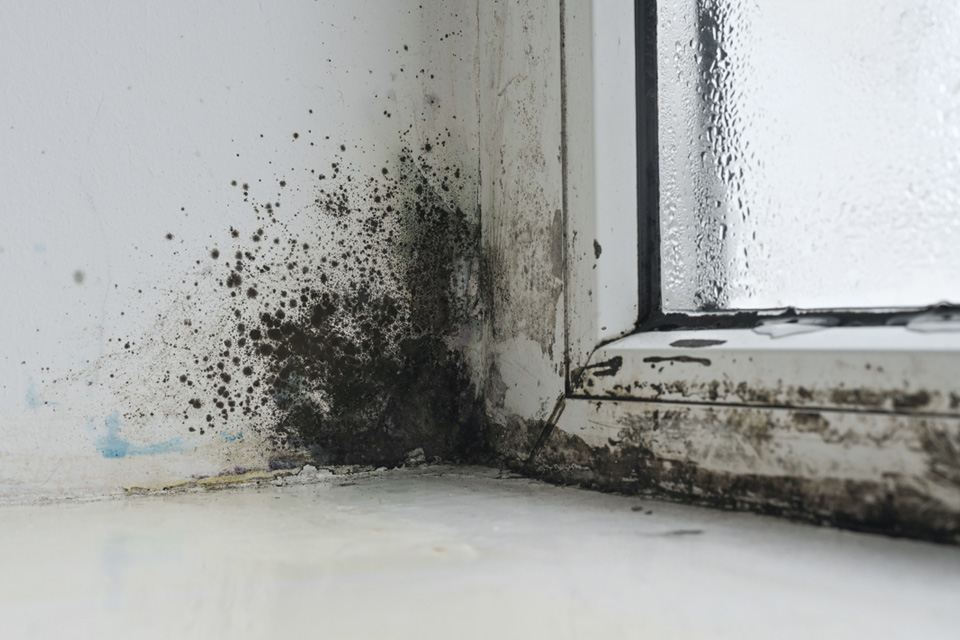
If you live in council housing and your landlord has failed to deal with reported damp, mould, leaks, plumbing defects, heating failures or other serious repair problems, you may be entitled to more than an apology. A successful housing disrepair claim can result in repairs being completed and compensation being paid for the way the conditions have affected your home, belongings, finances and health.
There is no fixed housing disrepair compensation tariff. Two tenants with similar-looking damp problems can receive very different amounts because the outcome depends on the cause, severity and duration of the disrepair, the rooms affected, the rent charged, the landlord’s response and the evidence available.
At ASL Solicitors, we specialise in housing disrepair claims against councils and public or registered housing associations. We do not deal with claims against private landlords. We are based in Rochdale and support eligible social housing tenants in Rochdale, Manchester and surrounding areas. You can contact us about a potential housing disrepair claim.
Important: This guide explains the law in England as at 3 August 2026. Housing law is devolved, so different legislation and procedures apply in Wales, Scotland and Northern Ireland. You can view the legal sources and references used in this article.
How much compensation can you get for housing disrepair?
Housing disrepair compensation can range from a small statutory payment of no more than £50 under the limited Right to Repair Scheme to several thousand pounds in a substantial legal claim. Serious cases involving years of disrepair, extensive loss of use, damaged belongings or personal injury can result in five-figure awards.
Exceptionally, a publicly reported case involving a council tenant resulted in an award of more than £50,000. The property had suffered longstanding leaks, damp, mould and other defects, and the court awarded compensation calculated at 35 per cent, 40 per cent and eventually 100 per cent of the rent for different periods of the claim.[10]
That does not mean £50,000 is a normal or expected payout. Most claims do not involve more than a decade of serious disrepair or a court finding that the entire property was unfit for human habitation.
Published compensation figures and examples
There is no official UK-wide database showing the average payout for a successful council housing disrepair claim. Many claims settle privately, settlement agreements may be confidential and published council figures often combine compensation with legal fees, surveyor costs and repair expenditure.
The following figures show the broad range of payments that can arise. They must not be treated as a calculator or guarantee.
| Type of payment or case | Published amount or range | What the figure represents |
|---|---|---|
| Council Right to Repair Scheme | £10, plus £2 for each additional day, up to £50 | A narrow statutory scheme for specified small and urgent council repairs. It is not the same as a full disrepair claim. |
| Housing Ombudsman: low-impact service failure | Up to £100 | Used where a landlord failure has caused relatively limited inconvenience or detriment. |
| Housing Ombudsman: maladministration without permanent impact | Up to £600 | A guideline for landlord failures that adversely affected the resident but did not cause a permanent impact. |
| Housing Ombudsman: significant impact | £600 or more | May apply where substantial redress is required because of physical or emotional impact. |
| Housing Ombudsman: severe long-term impact | £1,000 or more | Used in severe maladministration cases involving serious or repeated failures. |
| Lewisham Council damp and mould cases | £1,700, nearly £20,000 and £19,500 | Three separate Housing Ombudsman cases involving serious damp, mould, leaks and delayed repairs. |
| Reported individual court award against a council | More than £50,000 | An exceptional case involving longstanding disrepair and a home found unfit for human habitation. |
The Housing Ombudsman’s figures are complaint-handling benchmarks rather than court damages tariffs. A court can consider losses that the Ombudsman may not be able to determine, including personal injury, legal liability for damaged belongings and other consequential financial losses.
What can housing disrepair compensation include?
A housing disrepair settlement is normally divided into separate types of loss. The final amount may combine several elements rather than being one general payment for everything that went wrong.
Compensation for loss of use and enjoyment of your home
The main part of many housing disrepair claims is compensation for the loss of comfort, convenience and enjoyment caused by living with the defects.
This is sometimes described as general damages or damages for loss of amenity. It recognises that you did not receive the full use and benefit of the home for which rent was charged.
Relevant factors can include:
- Which rooms, facilities or parts of the property were affected
- Whether a room became completely unusable or was merely uncomfortable
- The severity and frequency of leaks, damp, mould, cold or other defects
- How long the conditions continued after the landlord had notice
- Whether the problem repeatedly returned after temporary repairs
- The effect on children, disabled residents and other vulnerable occupants
- Whether you had to sleep, cook, wash or store belongings elsewhere
A bedroom covered in extensive mould and no longer safe to sleep in will normally have a greater value than a small, isolated patch of mould that did not prevent the room from being used. Similarly, a complete loss of heating throughout winter is likely to have a more serious effect than a short interruption during mild weather.
Compensation linked to the rent
Courts frequently use the rent as a reference point when valuing the loss of comfort and convenience caused by disrepair. This does not mean the tenant automatically receives a refund of all rent paid.
The court may apply a percentage to the rent charged during the relevant period. It can also make a broader assessment of the discomfort and inconvenience and then compare the figure with the rent to check that the award is reasonable.[17]
The percentage can vary substantially. A relatively limited defect may justify only a modest reduction, while serious conditions affecting several rooms can justify a much higher percentage. Awards of 75 per cent and, in exceptional cases involving an unfit home, 100 per cent of the rent have been reported.[18]
The rent-based amount is usually calculated for the period beginning after the landlord knew about the defect and had a reasonable opportunity to complete the repair. It may end when an effective repair was completed, when the tenancy ended or at the date used by the court.
The Housing Ombudsman’s room-based calculation
The Housing Ombudsman’s compensation guidance, effective from 1 April 2026, provides a useful indication of how loss of use may be approached during a social housing complaint. It uses the following percentages of weekly rent where a room has been substantially impaired and cannot be used for its intended purpose:[8]
| Affected room | Percentage of weekly rent |
|---|---|
| Living room | 20% |
| Bedroom | 20% |
| Kitchen | 30% |
| Bathroom | 30% |
| Bathroom where another WC is available | 20% |
| Entire property | Up to 100% |
The Ombudsman may award additional compensation for distress and inconvenience where the effect went beyond the physical loss of a room. These percentages do not bind a court, and they should not be applied mechanically to every legal claim.
An example of a rent-based calculation
Suppose a council tenant pays £125 per week and a bedroom was genuinely unusable for 26 weeks after the council had been given a reasonable opportunity to repair the problem.
Using the Ombudsman’s 20 per cent room benchmark as an illustration, the starting calculation would be:
£125 x 20% x 26 weeks = £650
That £650 would relate only to the loss of the bedroom. Depending on the facts, additional amounts could potentially be considered for distress, damaged belongings, increased electricity use or a medically supported personal injury.
If severe disrepair made an entire property unusable for 52 weeks and the relevant benchmark reached 100 per cent, rent of £125 per week would produce a starting figure of £6,500. A court could still increase or reduce the award after considering the evidence and the individual circumstances.
Can you claim for belongings damaged by damp, mould or leaks?
You may be able to claim for belongings damaged as a direct result of housing disrepair. This is commonly referred to as special damages or consequential loss.
Items frequently affected include carpets, flooring, beds, mattresses, wardrobes, sofas, clothing, curtains, children’s belongings and electrical appliances. Compensation may also cover reasonable cleaning or disposal costs.
You will usually need to show that the defect caused the damage. For example, photographs showing water entering through a defective roof and damaging a bed below it can help connect the loss to the disrepair.
The amount is not always based on the cost of buying a brand-new replacement. The landlord or court may consider the item’s age, previous condition and reasonable second-hand value. Receipts, bank statements, photographs and evidence of replacement prices can all help.
Can you recover additional expenses?
Reasonable expenses caused by the disrepair may be recoverable where they can be evidenced. These can include:
- Higher electricity bills from using portable heaters or dehumidifiers
- Additional laundry and cleaning costs
- The cost of replacing food lost during a power failure
- Travel expenses caused by temporary accommodation
- Storage, removal and temporary accommodation costs
- Reasonable purchases needed because cooking, washing or heating facilities were unavailable
The Housing Ombudsman’s current guidance also provides specific complaint compensation figures of £15 per day for a complete loss of heating and hot water, £8 per day where only one of those services is lost, £10 per day for complete loss of power and £15 for a missed appointment.[8]
These are Ombudsman benchmarks, not automatic court awards. A legal claim may use actual evidenced expenditure instead, particularly where the tenant’s financial losses were greater.
Can you claim compensation for health problems?
A personal injury element may be included where housing conditions caused or materially worsened a physical or psychological condition.
Damp and mould may aggravate asthma, respiratory symptoms or certain allergies. Excess cold, unsafe flooring, defective stairs, electrical hazards and collapsing plaster can also cause injuries. Prolonged exposure to serious conditions may contribute to anxiety or other psychological symptoms.
A personal injury claim normally requires medical evidence. It is not enough to show that a health problem and disrepair existed at the same time. The evidence must address whether the housing conditions caused or worsened the condition and, where appropriate, the likely prognosis.
Section 4 of the Defective Premises Act 1972 may be relevant where a landlord that is responsible, or has a right, to maintain or repair the property fails to take reasonable care and someone is injured or belongings are damaged because of a defect.[4]
The Housing Ombudsman cannot determine personal injury liability in the same way as a court. It can consider the distress and inconvenience caused by a landlord’s failings, but a separate legal claim may be necessary where medical causation and damages are disputed.
Can the court order repairs as well as compensation?
Yes. A housing disrepair claim is not limited to obtaining money. Depending on the legal basis and circumstances, a settlement or court order may require the landlord to complete specified repairs within an agreed period.
The outcome can include:
- A schedule identifying the repairs that must be completed
- A deadline for starting and finishing the work
- Independent inspection or confirmation that the work is complete
- Temporary alternative accommodation where the home cannot safely be occupied
- Compensation for the tenant’s losses
- Payment of some or all recoverable legal and expert costs
Legal costs are not part of the tenant’s compensation. They are dealt with separately and depend on the court track, the outcome, the funding arrangement and the parties’ conduct.
What affects the value of a housing disrepair claim?
The seriousness of the visible damage is only one part of the valuation. A solicitor, landlord, Ombudsman or court will normally consider the full history.
How long the landlord knew about the problem
Compensation will not normally run from the first day a hidden defect developed if the landlord had no reasonable way of knowing about it.
In many Section 11 claims, liability depends on the landlord receiving notice and then failing to act within a reasonable time. Written repair reports, reference numbers, complaint responses and inspection records can therefore have a direct effect on the value of the claim.
Whether the repairs were effective
A landlord does not necessarily escape liability by attending the property. The question is whether it properly investigated the cause and completed an effective repair.
Repeatedly washing mould, painting over water stains or replacing damaged plaster without stopping the leak may allow the underlying problem to continue. A temporary or inadequate repair can extend the relevant compensation period.
How much of the property was affected
A claim is likely to be worth more where several rooms or essential facilities were affected. The loss of a kitchen, bathroom, only bedroom or the entire heating system can have a particularly serious effect on everyday life.
Your household’s circumstances
The impact may be greater where the landlord knew that the household included a baby, young child, older person, disabled tenant or someone with a relevant medical condition.
This does not create an automatic multiplier, but it can affect the urgency of the landlord’s required response and the distress, inconvenience or health consequences suffered.
Whether you allowed access
A council or housing association must normally be given reasonable access to inspect and repair the property. If access was repeatedly refused without a proper reason, the landlord may argue that part of the delay was not its responsibility.
Keep a record of appointments you attended, appointments the contractor missed and any reasonable alternative dates you offered.
The quality of your evidence
Compensation is easier to assess where there is a clear repair history, dated photographs, rent statements, receipts, medical records and evidence showing when rooms became unusable.
A lack of original receipts does not always prevent recovery, but it can make the value of damaged belongings or additional expenses more difficult to prove.
What are the largest housing disrepair payouts?
There is no reliable official record of the largest housing disrepair payout ever made to a UK council tenant. Court judgments are not always published, and many settlements are reached privately without admission of liability.
One of the largest publicly reported individual council cases we identified involved an award of more than £50,000 against the London Borough of Hammersmith and Fulham. The tenant had experienced serious disrepair over a lengthy period, and the property was ultimately found unfit for human habitation.[10]
Large aggregate figures should not be confused with individual payouts. For example, a Housing Ombudsman special investigation ordered £141,860 in compensation across 103 determinations involving one large housing association. That was a combined total for numerous residents, not one tenant receiving a six-figure award.[16]
Very high individual awards are unusual. They normally involve a combination of severe conditions, a long period of landlord failure, substantial rent-based damages, personal injury, damaged belongings or other significant losses.
Which laws apply to housing disrepair compensation?
Several laws can apply to one claim. The correct legal basis affects what must be proved, what compensation may be recovered and which time limit applies.
Section 11 of the Landlord and Tenant Act 1985
Section 11 places repairing obligations into most residential tenancy agreements. It generally requires the landlord to keep the structure and exterior of the home in repair, including drains, gutters and external pipes.[1]
It also covers installations for the supply of water, gas and electricity, sanitation, space heating and water heating. Depending on the facts, this can include boilers, radiators, pipes, toilets, sinks, baths and electrical installations.
A tenant may seek compensation where the landlord had notice of a relevant defect and failed to complete an effective repair within a reasonable time.
Sections 9A and 10 of the Landlord and Tenant Act 1985
Section 9A, inserted by the Homes (Fitness for Human Habitation) Act 2018, requires a rented home in England to be fit for human habitation when the tenancy begins and throughout the tenancy.[2]
Section 10 identifies matters that may make a home unfit. These include repair, stability, serious damp, ventilation, natural lighting, water supply, drainage, sanitation, cooking facilities and prescribed housing hazards.[3]
An unfitness claim can be wider than a traditional repair claim. It may apply where a dangerous condition results from a design or deficiency rather than a component that has physically deteriorated.
Where a court finds that a property was unfit, it can order the landlord to complete work and award compensation. A finding of unfitness does not automatically produce a 100 per cent rent award, but exceptionally serious cases have reached that level.
Section 4 of the Defective Premises Act 1972
Section 4 can impose a duty of care where the landlord is obliged, or has a right, to maintain or repair the property. The landlord must take reasonable care to protect people who could reasonably be expected to be affected by relevant defects.[4]
This provision can be important where disrepair causes physical injury or damage to belongings.
The Housing Act 2004 and HHSRS
The Housing Health and Safety Rating System, or HHSRS, is the statutory method used to assess housing hazards under the Housing Act 2004. It covers 29 hazard categories, including damp and mould, excess cold, electrical hazards, fire, falls, structural collapse, pests and sanitation problems.[7]
HHSRS does not provide a compensation tariff. However, evidence that a serious hazard existed can support arguments about fitness, risk, urgency and the reasonableness of the landlord’s response.
Awaab’s Law
Awaab’s Law inserts enforceable terms into social housing tenancy agreements. The first phase came into force in England on 27 October 2025 and, as at 3 August 2026, applies to emergency hazards and significant damp and mould hazards.[5]
Potential emergency hazards must be investigated and, where confirmed, made safe within 24 hours. Potential significant hazards must generally be investigated within ten working days. Written findings must normally be supplied within three working days after the investigation, and relevant safety work must usually be completed within five working days after the investigation concludes.
Where the property cannot be made safe within the required period, the landlord may have to secure suitable alternative accommodation at its expense.
If a social landlord breaches the implied tenancy term, a court can order repairs, award compensation and order payment of some or all of the tenant’s legal costs. Awaab’s Law does not impose an automatic fine payable to the tenant. Compensation remains based on the loss suffered.
The second phase is due to take effect on 30 November 2026. It will extend the requirements to further significant hazards. The phase-two provisions are not yet in force as at 3 August 2026.[6]
The Right to Repair Scheme
The Secure Tenants of Local Housing Authorities (Right to Repair) Regulations 1994 apply to specified small and urgent repairs for certain secure and introductory council tenants.[11]
If a qualifying repair is not completed within the prescribed period and a second contractor also misses the deadline, the tenant may receive £10 plus £2 for each additional day, up to a maximum of £50 for one repair.[12]
This limited payment does not prevent a separate legal claim where the same conditions caused more substantial loss and the legal requirements for that claim are met.
The Regulator of Social Housing’s Safety and Quality Standard
The Safety and Quality Standard requires registered providers to provide safe, good-quality homes and an effective, efficient and timely repairs service.[15]
The Regulator looks at landlord performance across its housing service rather than deciding individual compensation claims. A breach of a regulatory standard does not automatically determine how much compensation one tenant should receive.
The Pre-Action Protocol for Housing Conditions Claims
Before court proceedings are issued in England, the parties should normally follow the Pre-Action Protocol for Housing Conditions Claims.[13]
The protocol provides a framework for sending a Letter of Claim, exchanging repair records, arranging inspections, considering expert evidence and attempting to agree repairs and compensation.
The landlord should normally respond to a Letter of Claim within twenty working days. A failure to follow the protocol can affect court costs and case management.
The Limitation Act 1980
Housing disrepair claims are subject to legal time limits. A contractual claim will commonly have a six-year limitation period, while a personal injury claim will commonly have a three-year period.[14]
Determining when time began to run can be complicated where defects are recurring, breaches are continuing or the claim involves a child or protected party. Legal advice should be obtained promptly rather than waiting until the end of a possible limitation period.
Can you receive both Ombudsman compensation and court compensation?
You can use the landlord’s complaints procedure, the Housing Ombudsman process and legal remedies in appropriate circumstances, but you should not receive duplicate compensation for the same loss.
If the Housing Ombudsman has already ordered compensation, a court can take that payment into account when deciding what additional damages, if any, should be awarded. The same principle can apply where the landlord has already made a compensation payment through its complaints process.
The Ombudsman and court also perform different roles. The Ombudsman examines maladministration and what is fair in the circumstances. A court can determine legal liability, award damages for personal injury or property loss and make legally enforceable orders.
Will rent arrears reduce your compensation?
Rent arrears do not automatically prevent a housing disrepair claim. However, the council may counterclaim for unpaid rent or seek to set the arrears off against compensation.
For example, if a tenant receives £5,000 in compensation but owes £2,000 in rent, part of the settlement may be used to clear the arrears. The exact outcome depends on the settlement terms or court order.
Continue paying current rent unless a qualified adviser has specifically told you otherwise. Withholding rent can place the tenancy at risk and may weaken your position.
Can compensation affect means-tested benefits?
A substantial lump-sum payment may affect entitlement to means-tested benefits, depending on the amount, the type of compensation and how the payment is treated under the relevant benefit rules.
Ask your solicitor or a benefits adviser about the possible effect before the compensation is paid. Do not assume that every part of a housing disrepair settlement will be treated in the same way.
How can you improve the evidence supporting your compensation claim?
Evidence should show not only that disrepair existed but how it affected the value and use of your home.
Useful records include dated photographs, videos, repair reports, complaint correspondence, rent statements, a timeline of affected rooms, receipts, energy bills and evidence of damaged belongings. Medical records may be required where the claim includes an injury or worsening health condition.
Keep recording the problem while it continues. A photograph showing mould on one date may establish that it existed, but a series of dated photographs can demonstrate how long it remained and whether it returned after attempted repairs.
Speak to ASL Solicitors about housing disrepair compensation
If you have repeatedly reported damp, mould, leaks, plumbing problems, heating failures or another serious defect and your social landlord has failed to resolve it, we can consider whether you may have grounds for a housing disrepair claim.
At ASL Solicitors, we specialise in claims against councils and public or registered housing associations. We do not deal with housing disrepair claims against private landlords.
We are based in Rochdale and assist eligible tenants in Rochdale, Manchester and surrounding areas. To tell us about the conditions in your home, the repairs you have reported and how your household has been affected, get in touch with ASL Solicitors.
Frequently Asked Questions
What is the average payout for a housing disrepair claim?
There is no reliable official average. Smaller claims may be worth hundreds or a few thousand pounds, while serious claims can reach five figures. The amount depends on the rent, severity, duration, affected rooms, financial losses and any medically supported injury.
What percentage of rent can I receive as compensation?
There is no automatic percentage. Courts often use the rent as a reference point and apply a percentage that reflects the loss of use and enjoyment. Serious cases can produce high percentages, while a home found completely unfit has exceptionally resulted in an award based on 100 per cent of the rent.
How much compensation can I receive for damp and mould?
The amount depends on the cause, extent and duration of the damp and mould, the rooms affected, your rent and how the conditions affected your household. Additional compensation may be available for damaged belongings, increased expenses or medically supported health problems.
Can I claim for clothes and furniture damaged by mould?
Potentially, yes. You will need evidence that the disrepair caused the damage and evidence of the items’ value. Compensation may reflect their age and condition rather than the full price of buying brand-new replacements.
Can I claim for higher heating or electricity bills?
Reasonable additional energy costs may be recoverable where they were caused by the disrepair. Keep electricity bills, receipts and details of any portable heaters, dehumidifiers or other equipment you had to use.
Can I receive compensation if the council has completed the repairs?
Potentially, yes. Completing the repair does not necessarily remove liability for the earlier period of delay. You may still be able to claim for loss of use, inconvenience, damaged belongings, expenses or injury suffered before the work was completed.
What is the largest housing disrepair payout?
There is no official record of the largest ever payout. One publicly reported individual claim against a council resulted in compensation of more than £50,000, but this was an exceptional case involving longstanding serious disrepair and a property found unfit for habitation.
Does the Housing Ombudsman pay the same compensation as a court?
No. The Ombudsman awards proportionate redress for maladministration and service failures. A court can decide legal liability and award damages for matters such as personal injury, damaged belongings and other financial losses.
Can I claim if I have rent arrears?
Rent arrears do not automatically prevent a claim, but the council may counterclaim or deduct arrears from the compensation. Continue paying current rent and tell your solicitor about any arrears, repayment agreement or possession proceedings.
Can ASL Solicitors help with a private landlord claim?
No. We specialise in housing disrepair claims against councils and public or registered housing associations. We do not deal with claims against private landlords.
This article provides general information and does not constitute legal advice. The law, evidence, limitation periods and potential value of a claim depend on its individual facts.
References
1) UK Legislation – Landlord and Tenant Act 1985, Section 11:
https://www.legislation.gov.uk/ukpga/1985/70/section/11
2) UK Legislation – Landlord and Tenant Act 1985, Section 9A:
https://www.legislation.gov.uk/ukpga/1985/70/section/9A
3) UK Legislation – Landlord and Tenant Act 1985, Section 10:
https://www.legislation.gov.uk/ukpga/1985/70/section/10
4) UK Legislation – Defective Premises Act 1972, Section 4:
https://www.legislation.gov.uk/ukpga/1972/35/section/4
5) Ministry of Housing, Communities and Local Government – Awaab’s Law Phase 1: Timeframes for Repairs in the Social Rented Sector:
https://www.gov.uk/government/publications/awaabs-law-guidance-for-social-landlords/awaabs-law-guidance-for-social-landlords-timeframes-for-repairs-in-the-social-rented-sector
6) Ministry of Housing, Communities and Local Government – Awaab’s Law Phase 2: Guidance for Social Housing Landlords:
https://www.gov.uk/government/publications/awaabs-law-phase-2-guidance-for-social-housing-landlords
7) Ministry of Housing, Communities and Local Government – Housing Health and Safety Rating System: Tenant Guide:
https://www.gov.uk/government/publications/housing-health-and-safety-rating-system-hhsrs-tenant-guide
8) Housing Ombudsman – Compensation Guidance, Effective from 1 April 2026:
https://www.housing-ombudsman.org.uk/landlords-info/guidance-notes/compensation-guidance/
9) Housing Ombudsman – £40,000 Awarded Following Lewisham Council Damp and Mould Failings:
https://www.housing-ombudsman.org.uk/2024/03/14/lewisham-councils-failings-in-damp-and-mould-complaints/
10) Local Government Lawyer – Court Awards More Than £50,000 Against Council for an Unfit Home:
https://www.localgovernmentlawyer.co.uk/housing-law/397-housing-news/55802-court-awards-50-000-in-damages-against-council-over-home-that-was-unfit-for-human-habitation
11) UK Legislation – Secure Tenants of Local Housing Authorities (Right to Repair) Regulations 1994:
https://www.legislation.gov.uk/uksi/1994/133/made
12) Lewisham Council – Right to Repair and Statutory Compensation:
https://lewisham.gov.uk/myservices/housing/council-tenants/repairs/right-to-repair
13) Ministry of Justice – Pre-Action Protocol for Housing Conditions Claims in England:
https://www.justice.gov.uk/courts/procedure-rules/civil/protocol/prot_hou
14) UK Legislation – Limitation Act 1980:
https://www.legislation.gov.uk/ukpga/1980/58/contents
15) Regulator of Social Housing – Safety and Quality Standard:
https://www.gov.uk/government/publications/safety-and-quality-standard
16) Housing Ombudsman – Special Investigation and £141,860 Aggregate Compensation Award:
https://www.housing-ombudsman.org.uk/2023/07/27/ombudsman-orders-lq-to-pay-142000-in-compensation-after-finding-prolonged-period-of-decline-in-special-investigation/
17) Becket Chambers – Disrepair Claims in the County Court and the Assessment of Damages:
https://becket-chambers.co.uk/articles/disrepair-claims-in-the-county-court/
18) Garden Court Chambers – Court Awards 100% of Rent in Damages for an Unfit Property:
https://gardencourtchambers.co.uk/court-awards-100-of-rent-in-damages-to-tenant-whose-property-was-unfit-for-habitation/
19) Ministry of Justice – Housing Disrepair Claims: Call for Evidence:
https://www.gov.uk/government/calls-for-evidence/housing-disrepair-claims/housing-disrepair-claims
20) ASL Solicitors – Contact Us:
https://aslsolicitors.com/contact/